What if customs compliance could do more than keep a business on the right side of the rules?
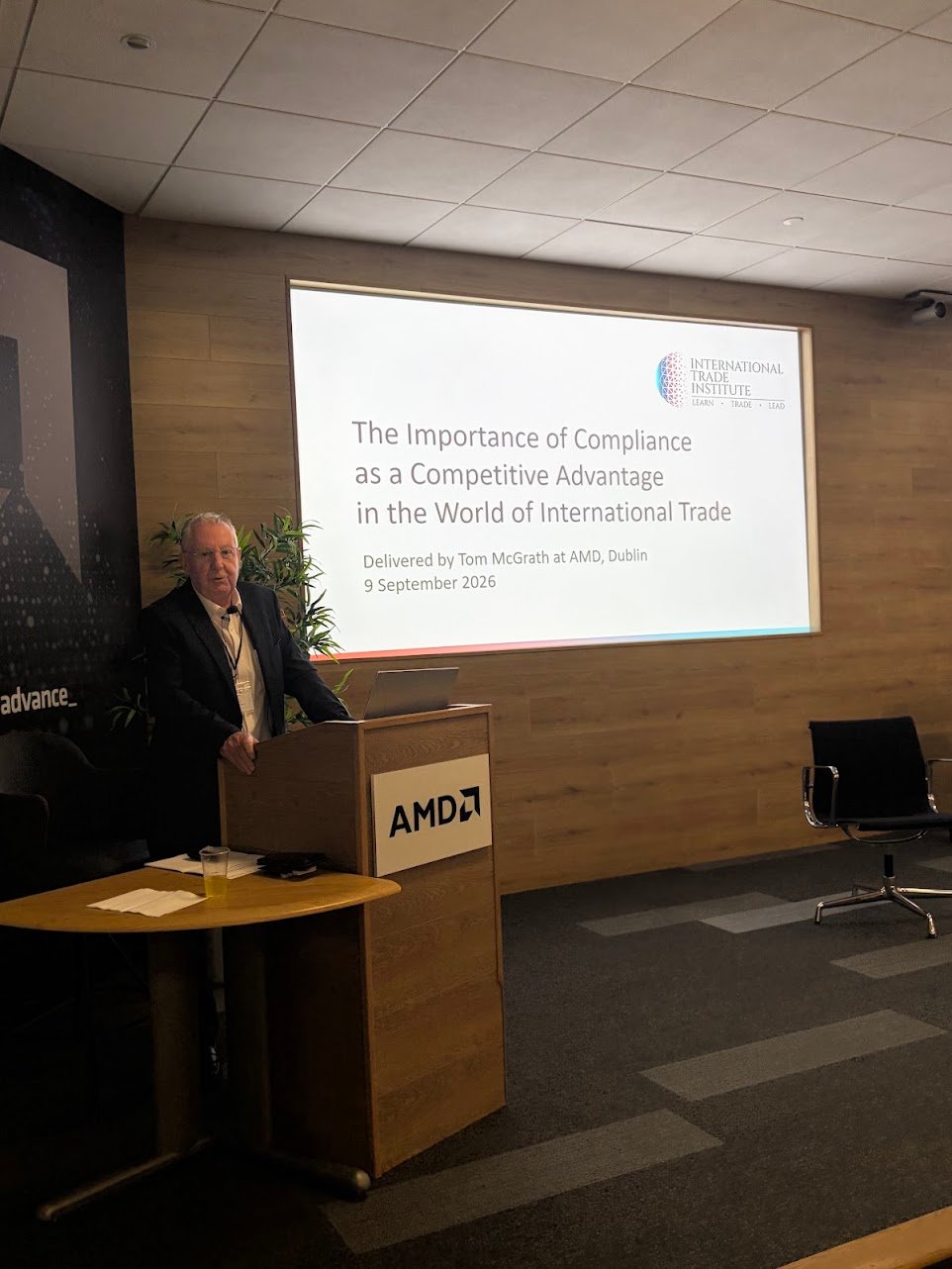
That was the central message from Tom McGrath in his session, “The Importance of Compliance as a Competitive Advantage in the World of International Trade,” delivered for our Global Trade Leadership Summit at AMD in Dublin.
Tom took the audience through the practical foundations of customs compliance, from audits and declarations to supply chains, customs agents, procedures, record keeping and staff awareness.
At the heart of the session were the Four Pillars of customs compliance: Classification, Customs Valuation, Origin and Incoterms. Each plays an important role in ensuring that goods are declared correctly and that businesses can demonstrate how their customs decisions have been made. But perhaps the most important message was about what happens beyond the declaration. Strong compliance depends on accurate data, clear responsibilities, robust records, well-designed SOPs and people who understand their roles. Customs agents and brokers may support the process, but businesses still need the knowledge and oversight to understand their own customs activities and maintain a reliable audit trail.
Tom highlighted the potential benefits of treating customs compliance strategically: lower operational costs, faster movement of goods, fewer delays and the potential to build trusted trader status.
It was a fitting message to close our programme with: international trade is becoming more complex, but strong fundamentals still matter. The organisations that understand their obligations, invest in their people and build compliance into the way they operate are better placed to trade with confidence.
A brilliant session from Tom, and a very strong note on which to finish the Global Trade Leadership Summit 2026.