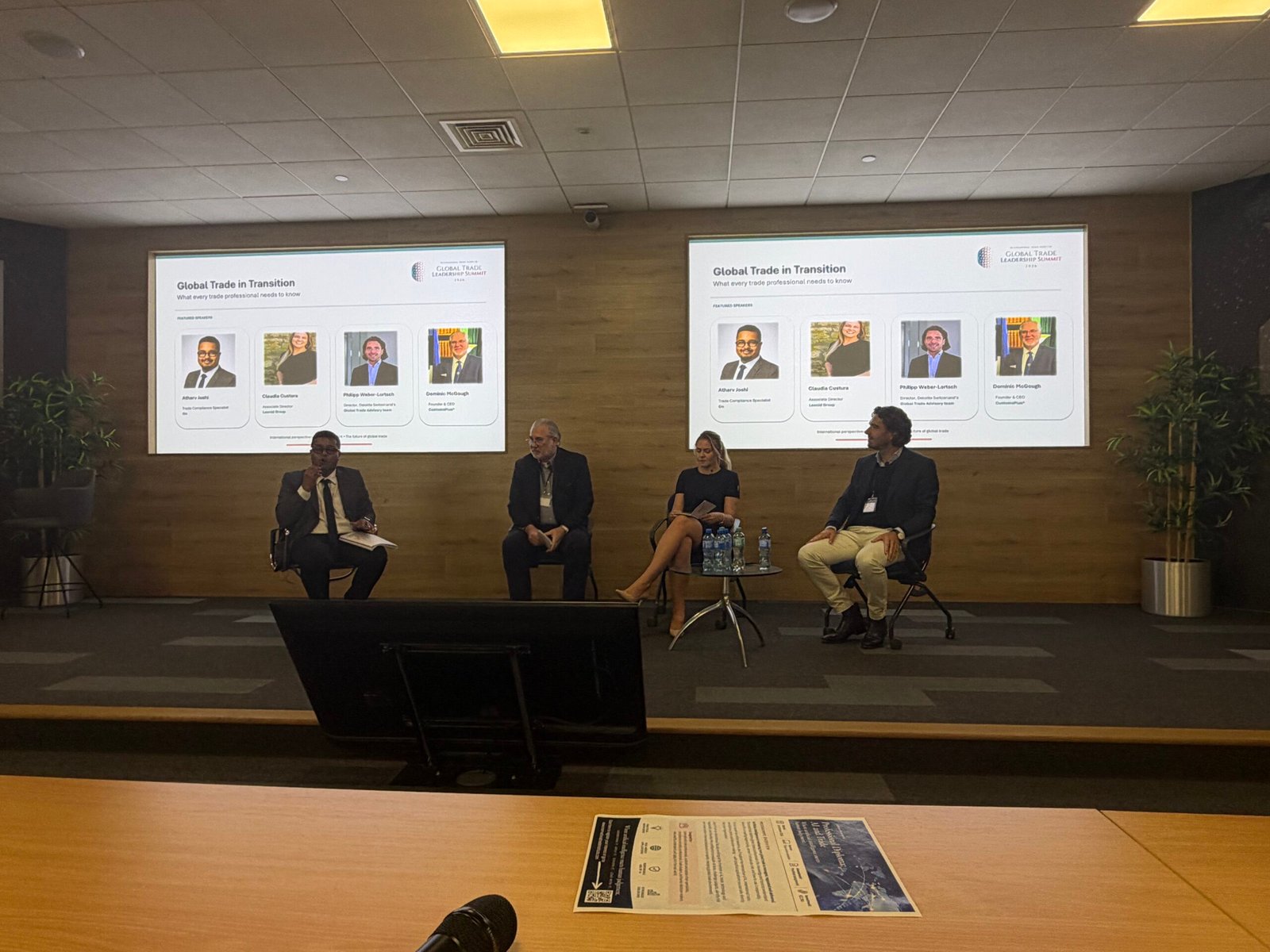
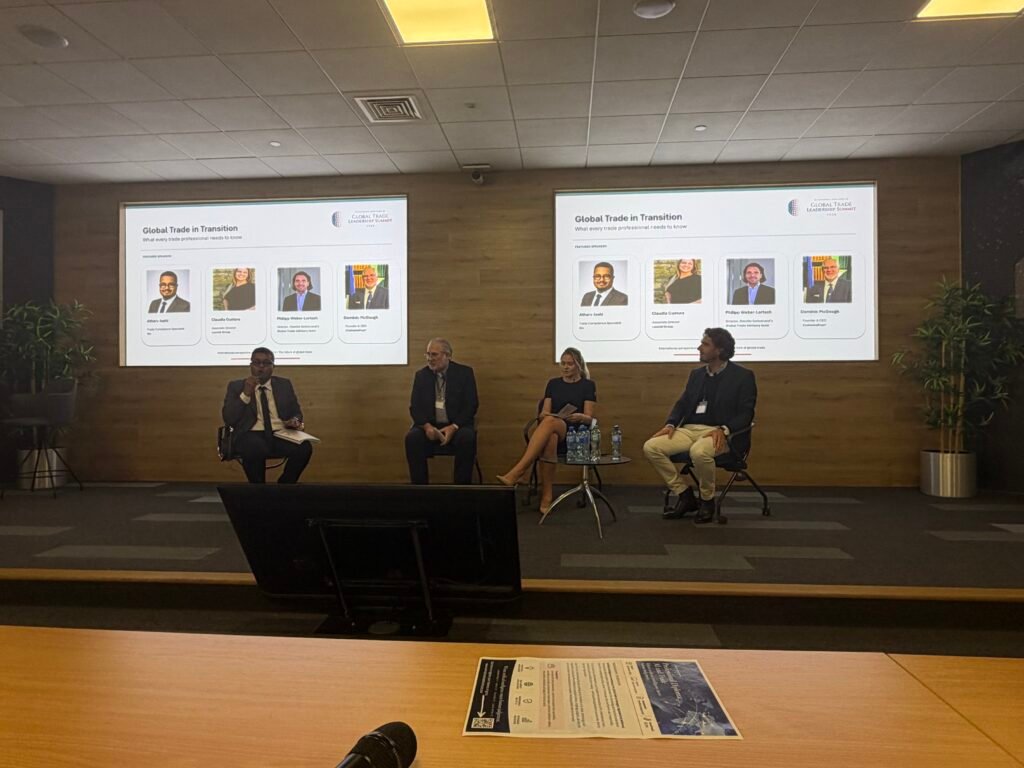
During first panel discussion led by Atharv Joshi, our panellists – Claudia Custura, Dominic McGough and Philipp Weber-Lortsch – tackled the question: are geopolitics, industrial policy, economic security and international cooperation reshaping the global trading system?
The discussion looked at how trade compliance is evolving in response to increasing geopolitical uncertainty. As governments place greater emphasis on economic security and industrial policy, businesses are having to think more carefully about where they source, where they sell and how they manage their international supply chains. For trade compliance teams, this means the role is becoming broader. Technical knowledge remains essential, but it increasingly needs to be combined with an understanding of the wider business and geopolitical environment.
That is an important change in how we think about the profession. Compliance teams are increasingly involved in questions that reach beyond the immediate transaction: understanding business strategy, assessing geopolitical developments and helping organisations make informed decisions about international markets and supply chains.
The panel offered a timely discussion on a function that is changing alongside the trading environment itself. As geopolitics and economic security become more closely connected to international commerce, trade compliance professionals are increasingly being asked to bring both technical expertise and commercial judgement to the table.