The global trading system is changing. Geopolitical tensions, new technologies, sustainability requirements and shifting policy priorities are all changing the environment in which businesses trade and governments make decisions.
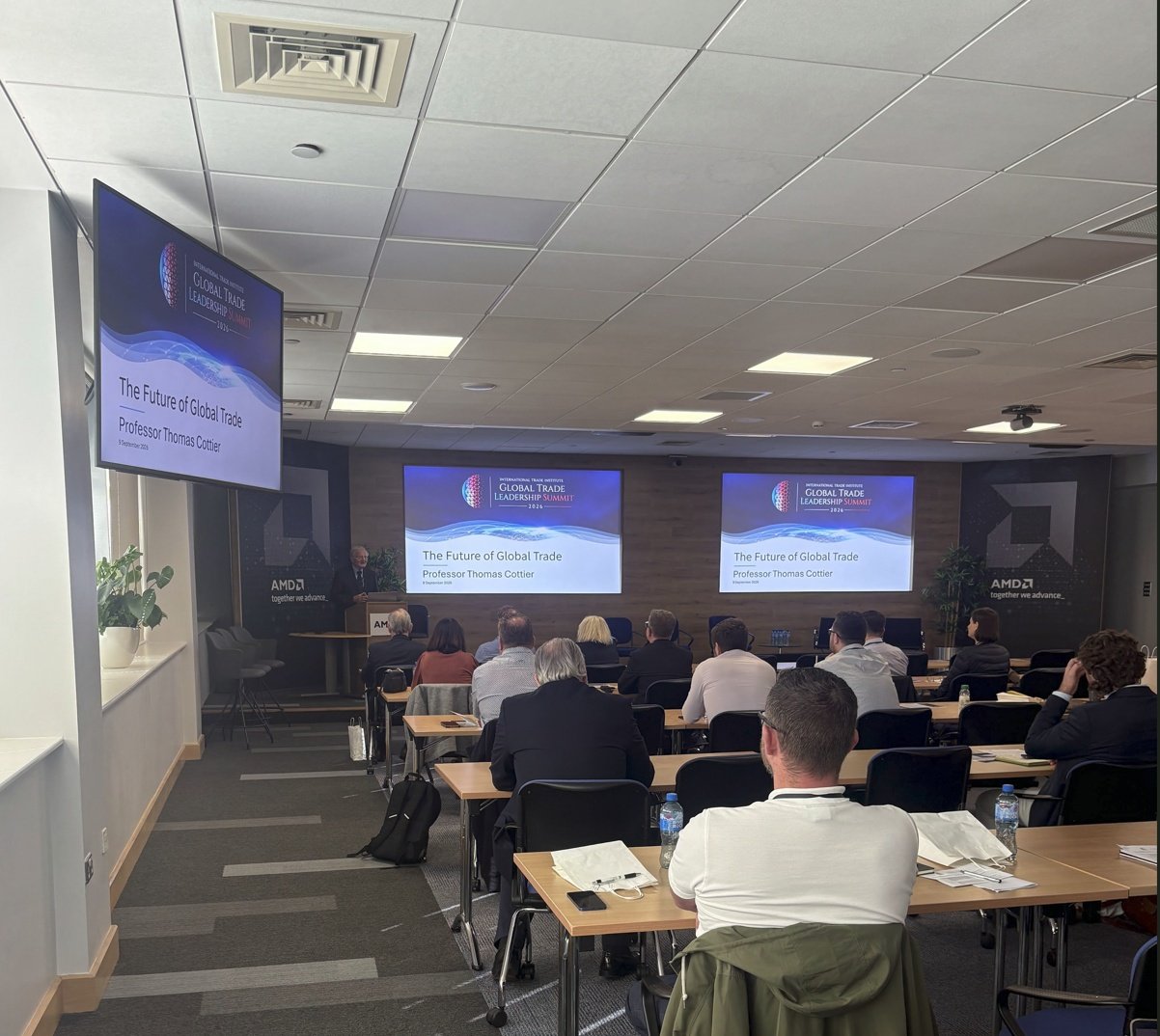
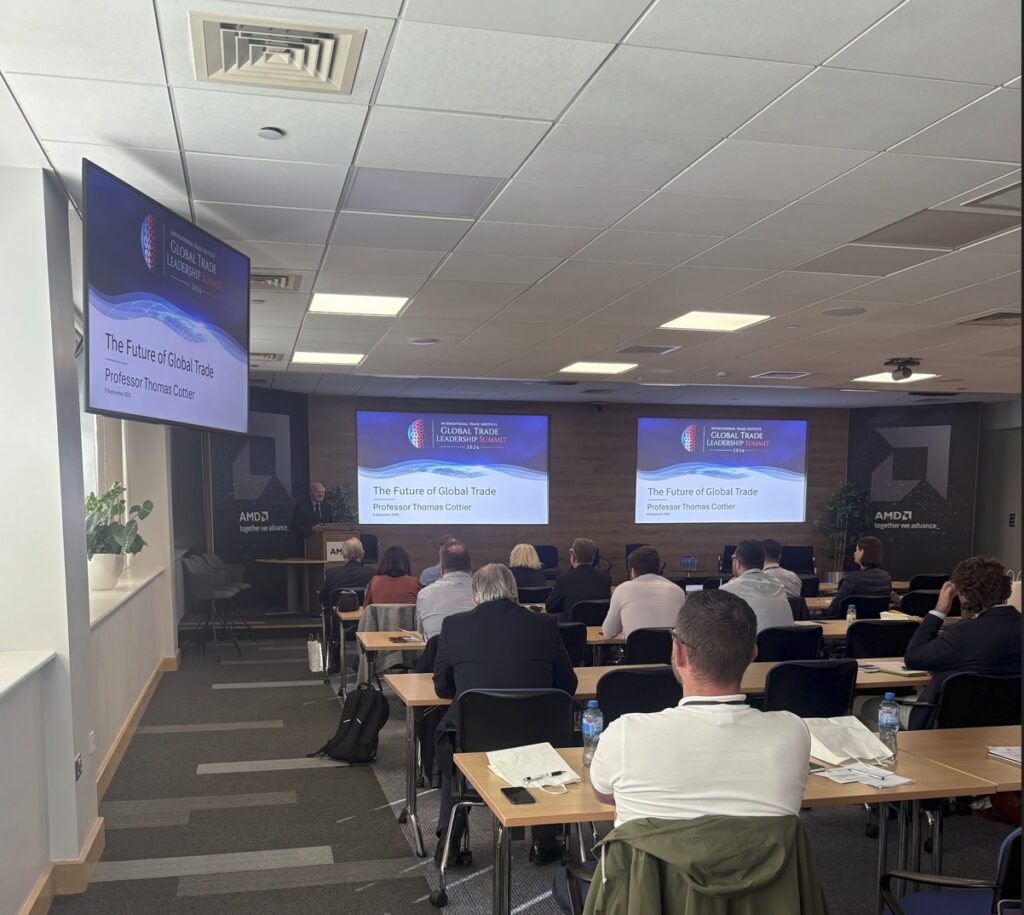
At the Global Trade Leadership Summit at AMD (Dublin) in September, Professor Thomas Cottier joined us for a wide-ranging dialogue on what these changes mean for the future of international trade.
His perspective was both global and long-term. He framed trade transformation around the relationship between geopolitics, technology, policy and competitiveness, while also drawing attention to a development that is becoming increasingly important for businesses: the growing connection between private and public law.
One of the themes Professor Cottier returned to was the increasing importance of compliance. As sustainability and corporate social responsibility become more closely connected to global value chains, businesses are facing a much broader set of obligations. Compliance is no longer confined to traditional customs or regulatory requirements. Expectations around sustainability, responsible business conduct and corporate responsibility are increasingly becoming part of the way international value chains are governed.
As Professor Cottier reflected, the increased importance of compliance is being driven in part by the way private and public law are becoming increasingly linked through sustainability and corporate social responsibility in value chains. For companies operating internationally, that creates a more complex environment. Understanding the rules is one part of the challenge. Understanding how those rules interact with commercial relationships and global supply chains is becoming just as important.
AI was another part of the wider discussion around trade transformation. Professor Cottier made an important observation in his reflections on the conference: AI, like new technologies that came before it, can be of enormous help, but it also creates new responsibilities. That balance is worth considering. Technology can improve the way businesses operate, analyse information and manage increasingly complex international transactions. At the same time, organisations need to think carefully about how these technologies are used, who remains responsible for decisions and what new risks they introduce.
Perhaps the most valuable aspect of Professor Cottier’s contribution was the long-term perspective. Trade professionals are often required to respond to immediate developments: a new regulation, a geopolitical event, a change in market access or a new compliance requirement. But the bigger transformation is taking place over a much longer timeframe. The interaction between geopolitics, technology, policy and competitiveness is reshaping the environment in which international trade operates. For businesses, governments and trade professionals alike, understanding those connections will be essential.
We were delighted to welcome Professor Thomas Cottier to the Global Trade Leadership Summit for this important dialogue on the future of international trade.